

Convening Canada to Move More and Live Well
CHFI brings together partners, communities, and leaders to connect evidence with action and advance proactive health through movement, connection, and wellbeing across Canada.
Be part of a national movement for movement, connection, and wellbeing. The Let’s Move, Canada! Challenge brings Canadians together through simple, inclusive ways to move more, connect more, and live well.
The Challenge is an initiative of the Canadian Health and Fitness Institute (CHFI), developed in collaboration with the Indigenous Physical Activity & Cultural Circle (IPACC). It begins each year on National Health and Fitness Day and includes recognition of National Indigenous Physical Activity Awareness Week (NIPAAW).
At its heart, the Challenge is about more than physical activity. Movement strengthens connection, reduces isolation, builds belonging, and supports individual and community wellbeing. Through shared participation and stories from across the country, Let’s Move, Canada gives Canadians a simple way to take part in something larger.
Join CHFI's Online Community Hub
Join CHFI’s online community and connect with Canadians who want to move more, live healthier, and help build a more active country. This hub is a place to find encouragement, access practical resources, follow national initiatives like Let’s Move, Canada!, and discover simple ways to get involved wherever you are. Whether you’re just beginning to build movement into your life or already helping your community get active, you belong here.
How To Join
1. Visit the Online Community sign-in page.
2. Register an account.
3. Log in and start connecting!
Health awareness isn’t the problem.
The real gap is coordination, connection, and practical action.
Across Canada, many promising efforts are already underway. But too often they remain fragmented, disconnected, or difficult to sustain and scale.
CHFI exists to help close that gap.
The Solution Is Working Together
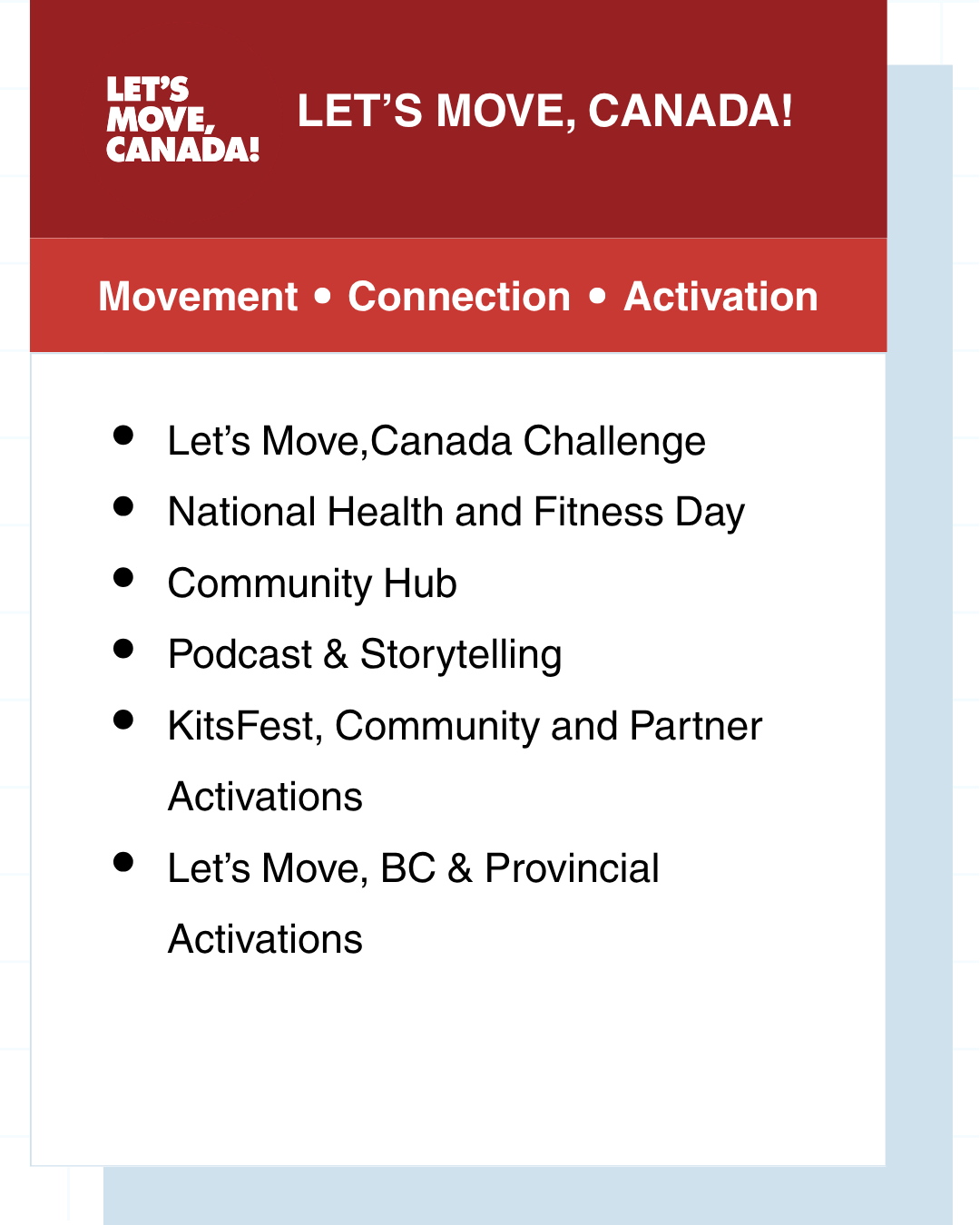
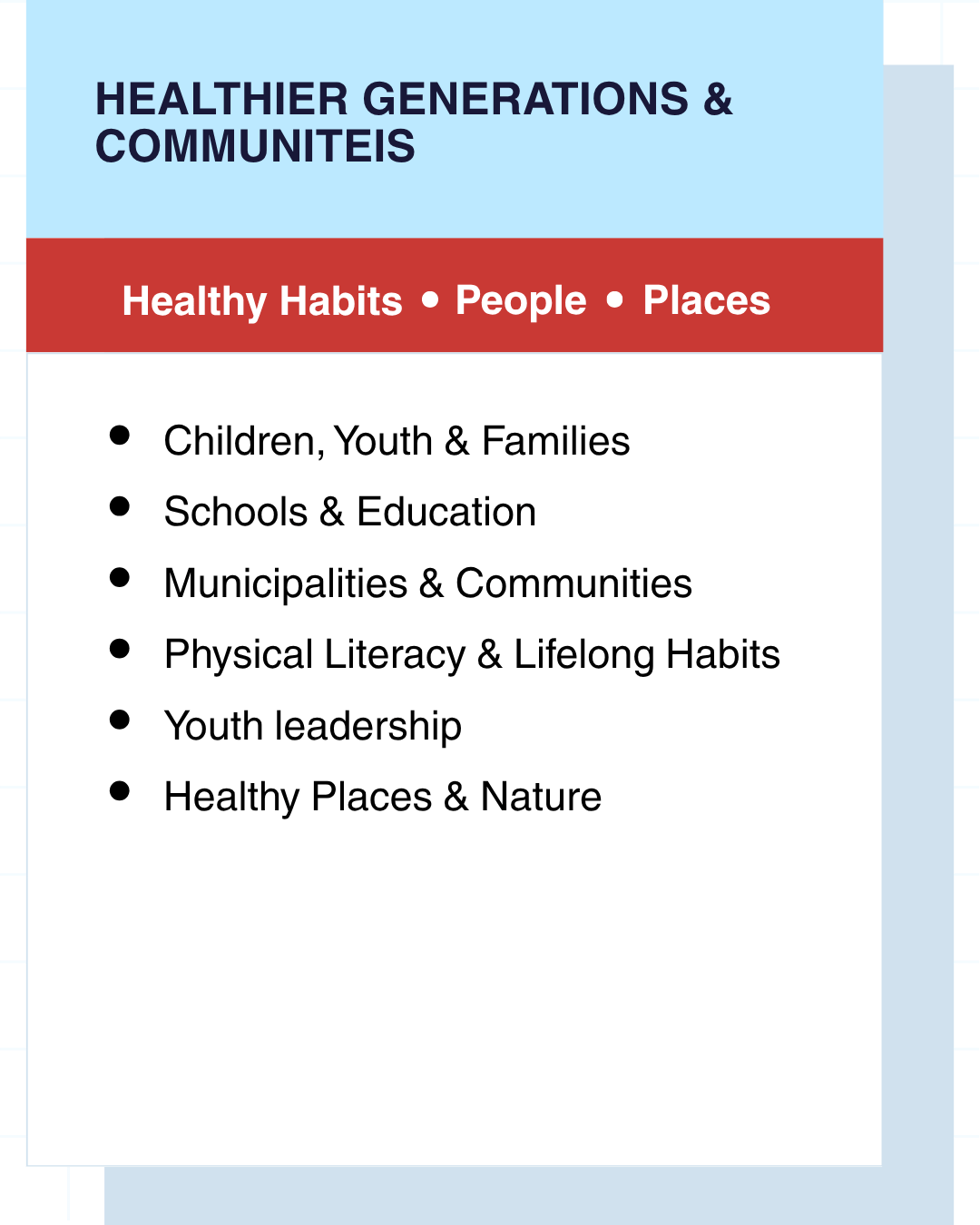
CHFI connects partners and communities around a shared goal: advancing proactive health through movement, connection, and wellbeing.
Through Let’s Move, Canada!, national convenings, and cross-sector collaboration, CHFI helps promising ideas gain the visibility, partnerships, and support they need to grow.
Our Guiding Pillars
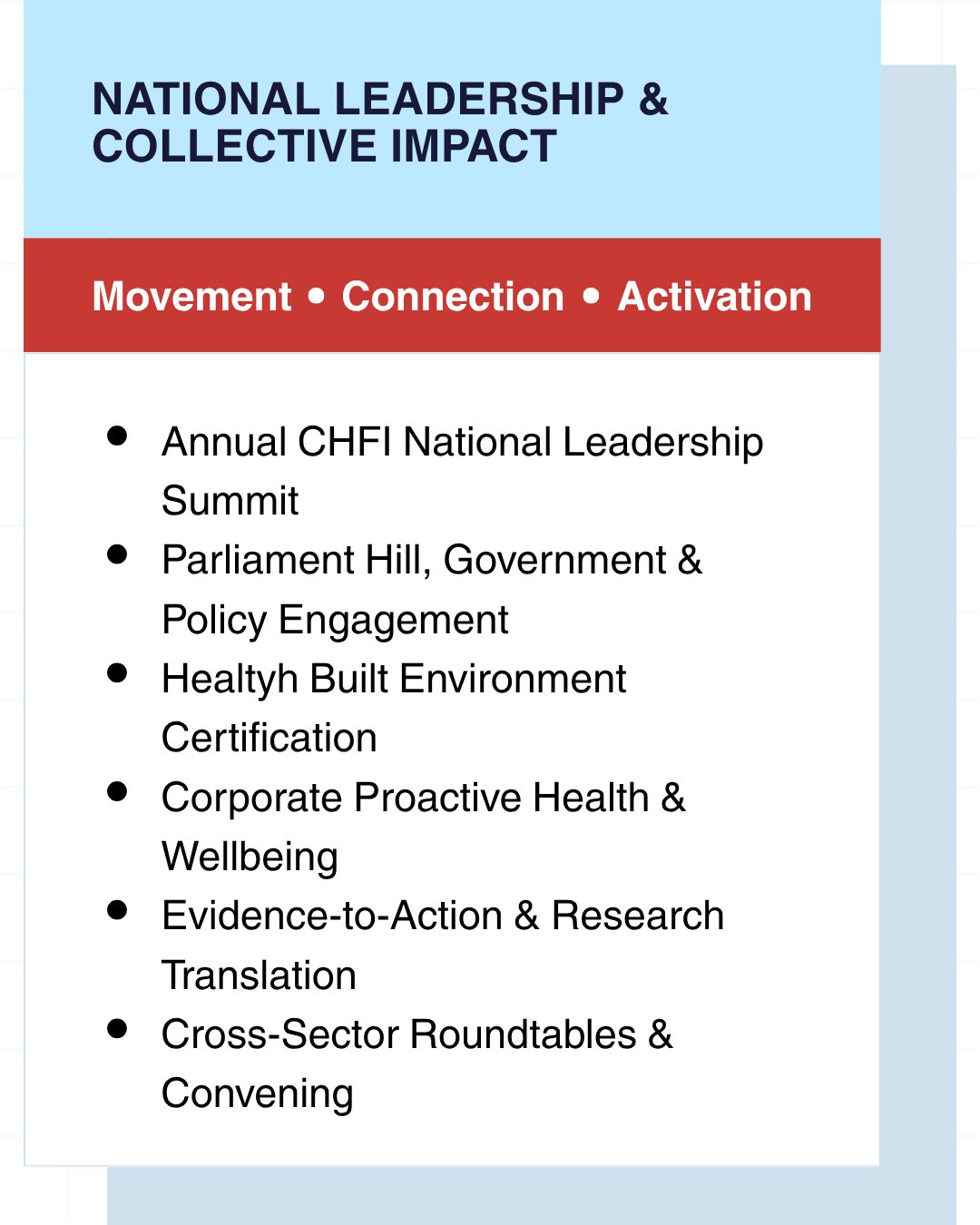
Why CHFI Is Positioned to Lead
Leadership on National Health and Fitness Day
Trusted relationships across health, sport, recreation, and community sectors
A growing national platform for movement through Let’s Move, Canada! and CHFI convenings

What working together makes possible:
More Ways to Get Involved
Making it easier for Canadians to find opportunities to move, connect, and participate.
Stronger Local Communities
Connecting successful local efforts with broader networks, partners, and opportunities.
More of What Works
Helping ideas, evidence, and effective approaches reach more people.
Healthier Everyday Lives
More opportunities for movement, connection, and wellbeing where Canadians live, learn, work, and gather.
1. Connect
Learn how CHFI and its partners are advancing movement across Canada.
2. Engage
Take part through initiatives, events, or partnerships
3. Build Momentum
Help strengthen a culture of movement across Canada
Find Your Way to Move
Let's Move, Canada
Find simple ways to move more, connect with others, and join a growing movement across Canada.
Annual Summit and Events
Explore the gatherings helping shape practical action around movement and proactive health.
In Your Community
Find local initiatives, challenges, and partnerships that help your community move more, live well, and build a healthier Canada.
For Partners and Organisations
Work with CHFI to strengthen movement, participation, and wellbeing in your community or sector.
The Let’s Move, Canada Podcast





Fragmentation will keep slowing progress.
Good ideas will struggle to reach more people
Communities will have fewer opportunities to build lasting movement and connection
Unhealthy routines will become harder to change
But when communities, partners, and initiatives work together, more Canadians can move more, connect more, and live well.
Be Part of the Momentum
Join the Movement
What makes Brazilian jiu-jitsu so much more than a martial art?
In this episode of the Let’s Move Canada Podcast, we sit down with Paulina Bak and Lucas Wilhan, founders of Lapel Arts Academy, to explore how Brazilian jiu-jitsu builds confidence, resilience, discipline, and community. We also discuss the misconceptions surrounding martial arts, the mental and emotional benefits of training, and why movement can truly be for everyone.
Whether you're curious about trying jiu-jitsu or simply looking for a new perspective on wellness, this conversation is one you won't want to miss.
Follow their journey at @lapelarts on instagram
Show Notes
Different Paths, Same Passion: Pauline grew up in Brazil doing gymnastics, swimming, volleyball, and weightlifting before discovering jiu-jitsu at 22. Lucas grew up in Montreal playing soccer and video games, and found in jiu-jitsu a sport where hard work had a direct, visible payoff. Both started the sport as adults and never looked back.
What Is Brazilian Jiu-Jitsu: BJJ is a grappling martial art that starts standing and moves to the ground, where the goal is to control your opponent and secure a submission, like an arm lock, joint lock, or choke. There is no striking. Participants can tap out at any time, making it relatively safe and low impact. It is often called "the gentle art" because it relies on leverage and technique rather than size or brute strength.
The Chess Match on the Mat: Both Pauline and Lucas describe jiu-jitsu as a chess match that demands simultaneous physical and mental engagement. Because you can not afford to lose focus for even a moment, the sport naturally builds emotional regulation, resilience, and problem-solving skills that carry off the mat too.
Why They Fell in Love With It: What hooked them both was the rare combination of individual challenge and team atmosphere. You push yourself to improve, but you need training partners to do it. That balance of personal growth within a supportive community is, they say, what keeps most people coming back.
Building Lapel Arts Academy: The vision behind Lapel Arts Academy was simple: create the kind of jiu-jitsu experience that changed their own lives, and make it available to their community. The gym is designed to be a positive, stress-free space where people can show up after a long day and fully switch off. They also have a competition team for those who want to push further.
A Sport for Everyone, Not Just Athletes: One of the biggest barriers to trying jiu-jitsu is the feeling that you need to already be fit or athletic. Pauline and Lucas push back hard on this. Their beginner classes use game-based training so newcomers can participate without any prior knowledge. You can get in shape as you go, sit out rounds, and set your own pace.
Busting the Media Myths: Movies like John Wick have created the impression that jiu-jitsu is all flying submissions and flashy moves. In reality, it is controlled, technical, and slow when done well. Another common misconception is that it is only ground work, when in fact takedowns and standing techniques are a big part of modern jiu-jitsu.
Transformations They Have Witnessed: Pauline shared how women who arrive shy and hesitant about physical contact often leave months later visibly more confident in their bodies. One of her current students is in her third trimester of pregnancy and still training. Lucas spoke about students who win at the Worlds level after committing to competition, and kids who go from crying in class to leading their peers on the mat.
Classes at Lapel Arts Academy: Kids programs start at age 5 and focus on the traditional gi. Adult classes offer both gi and no-gi jiu-jitsu and welcome students from teens through their 30s and beyond.
Growing the Women's Side of the Sport: Making jiu-jitsu a welcoming space for women is a personal mission for Pauline. She describes a fighter side that many women have but rarely get the chance to develop, and sees jiu-jitsu as one avenue for bringing it out.
Jiu-Jitsu for Kids Is Booming: Originally an adult sport, Brazilian jiu-jitsu is increasingly popular with children. Pauline and Lucas see its benefits for kids as especially meaningful, including confidence building, anti-bullying skills, leadership, focus, and emotional regulation.
What Canada Could Do Better: Pauline and Lucas would love to see more public promotion of movement and sport in Canada, more government support for businesses building healthy communities, and eventually jiu-jitsu included in community center programming alongside other mainstream sports.
Call to Action
Visit Lapel Arts Academy: Check out their website at lapelarts.ca to explore classes and programs.
Follow Along: Find them on Instagram @lapelarts, and follow the coaches individually at @lucaswilhanjiujitsu and @paulibak.
Join the Movement: DM @letsmovecanada to suggest guests or get involved in future episodes.